
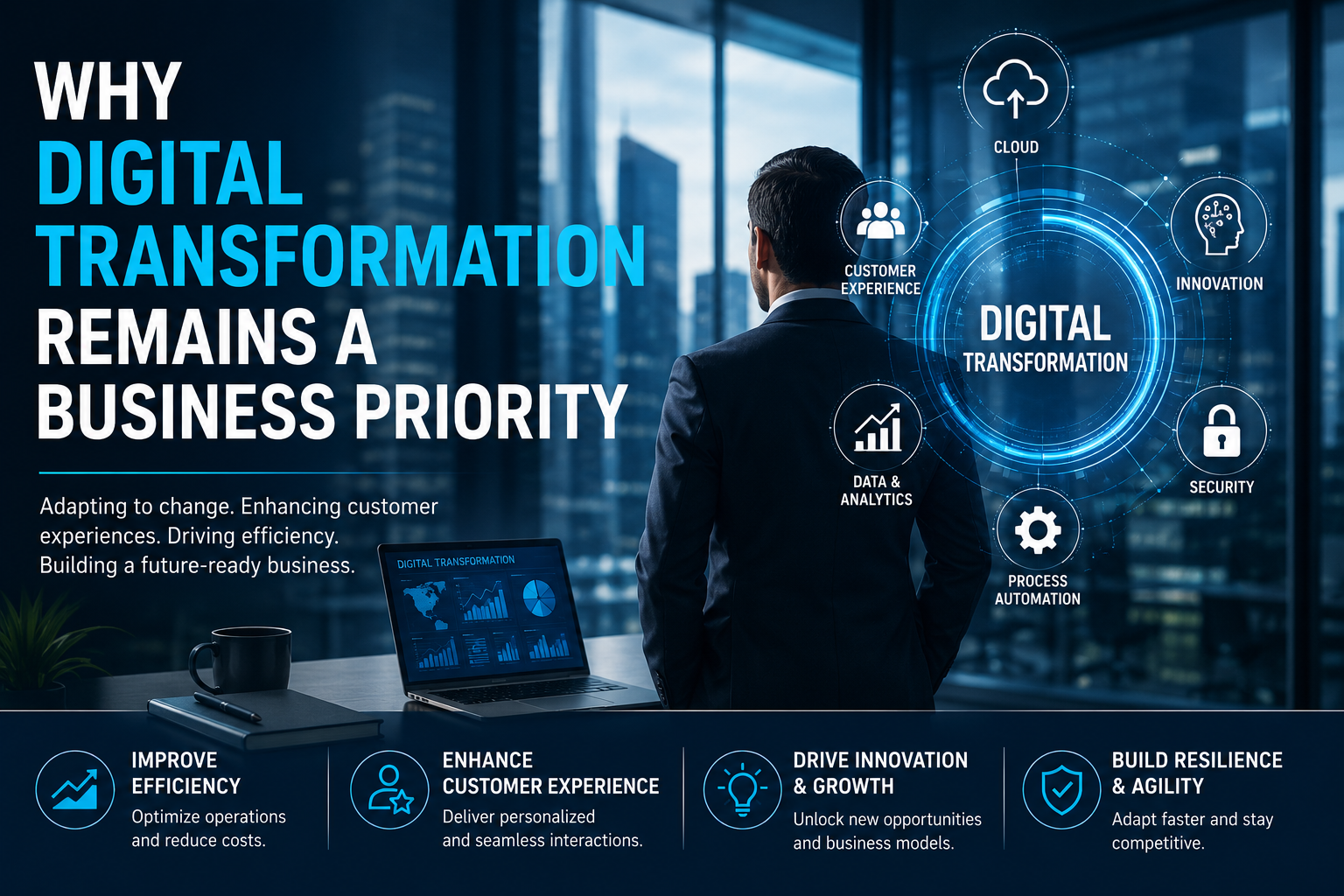
Discover why Digital Transformation remains essential for business growth, innovation, operational efficiency, and long-term competitiveness in 2026.
Why Digital Transformation Remains a Business Priority
Technology continues to reshape industries, customer expectations, and the way organizations operate. As businesses face increasing competition and rapidly changing market conditions, Digital Transformation remains a top priority for companies seeking long-term growth and resilience. Rather than simply adopting new technologies, digital transformation involves integrating digital solutions into every aspect of an organization to improve efficiency, innovation, and customer experiences.
Businesses that embrace digital transformation are better equipped to adapt to changing demands, respond to new opportunities, and remain competitive in an increasingly connected global economy.
Understanding Digital Transformation
Digital Transformation is the process of using digital technologies to improve business operations, products, services, and customer interactions. It goes beyond implementing new software by changing how organizations create value and deliver solutions.
Successful digital transformation combines technology, people, and processes to achieve measurable business improvements.
Improving Operational Efficiency
One of the primary benefits of Digital Transformation is increased operational efficiency. Businesses can automate repetitive tasks, streamline workflows, reduce manual errors, and improve collaboration across departments.
These improvements allow organizations to save time, lower operating costs, and increase overall productivity.
Enhancing Customer Experience
Modern customers expect fast, personalized, and seamless interactions across multiple digital channels. Businesses use digital technologies to better understand customer preferences, provide responsive support, and deliver customized experiences.
Improved customer satisfaction strengthens loyalty and contributes to long-term business success.
Supporting Better Decision-Making
Organizations generate vast amounts of business data every day. Digital transformation enables businesses to collect, analyze, and interpret this information using advanced analytics and artificial intelligence.
Data-driven insights help leaders make informed decisions, identify opportunities, and respond more effectively to changing market conditions.
Accelerating Innovation
Digital technologies encourage organizations to develop new products, improve existing services, and explore innovative business models.
Businesses that invest in Digital Transformation are often more agile and better positioned to respond to emerging technologies and evolving customer demands.
Strengthening Business Agility
Rapid market changes require organizations to respond quickly. Cloud computing, automation, and digital collaboration tools allow businesses to adapt operations more efficiently while supporting remote work and flexible business models.
Greater agility helps organizations remain competitive during periods of uncertainty.
Improving Cybersecurity
As businesses become more digital, protecting sensitive information becomes increasingly important. Digital transformation includes implementing modern cybersecurity solutions, secure cloud infrastructure, employee awareness training, and continuous threat monitoring.
Strong cybersecurity supports customer trust and business continuity.
Enabling Scalable Growth
Digital infrastructure allows businesses to expand without significant investments in physical resources. Cloud-based systems, automated processes, and integrated business platforms support growth while maintaining operational efficiency.
Scalable technology solutions make it easier for organizations to enter new markets and serve growing customer bases.
Empowering Employees
Digital tools improve communication, collaboration, and access to information. Employees can work more efficiently using cloud platforms, project management software, automation tools, and real-time data.
Investing in digital skills also helps organizations prepare their workforce for future technological advancements.
Building Long-Term Competitive Advantage
Businesses that continuously embrace Digital Transformation often gain lasting competitive advantages through improved efficiency, stronger customer relationships, faster innovation, and more informed decision-making.
Organizations that delay digital transformation risk falling behind competitors that are better prepared for future market changes.
Conclusion
Digital Transformation continues to be a business priority because it enables organizations to improve efficiency, strengthen customer experiences, encourage innovation, enhance cybersecurity, and support sustainable growth. As technology continues evolving, businesses that integrate digital solutions into their long-term strategies will be better positioned to adapt, compete, and succeed in an increasingly digital world.
FAQ
1. What is Digital Transformation?
Digital Transformation is the integration of digital technologies into business operations, processes, products, and customer experiences to improve performance and create long-term value.
2. Why is Digital Transformation important?
It helps businesses improve efficiency, increase innovation, enhance customer satisfaction, strengthen security, and remain competitive in rapidly changing markets.
3. Which technologies support Digital Transformation?
Cloud computing, artificial intelligence, automation, data analytics, cybersecurity solutions, and collaboration platforms are among the most important technologies driving digital transformation.
4. How does Digital Transformation improve customer experience?
Digital tools allow businesses to deliver personalized services, faster support, seamless communication, and more convenient customer interactions across multiple channels.
5. How can businesses successfully implement Digital Transformation?
Organizations should develop a clear digital strategy, invest in employee training, adopt scalable technologies, strengthen cybersecurity, and continuously evaluate their digital initiatives to support long-term business growth.
