
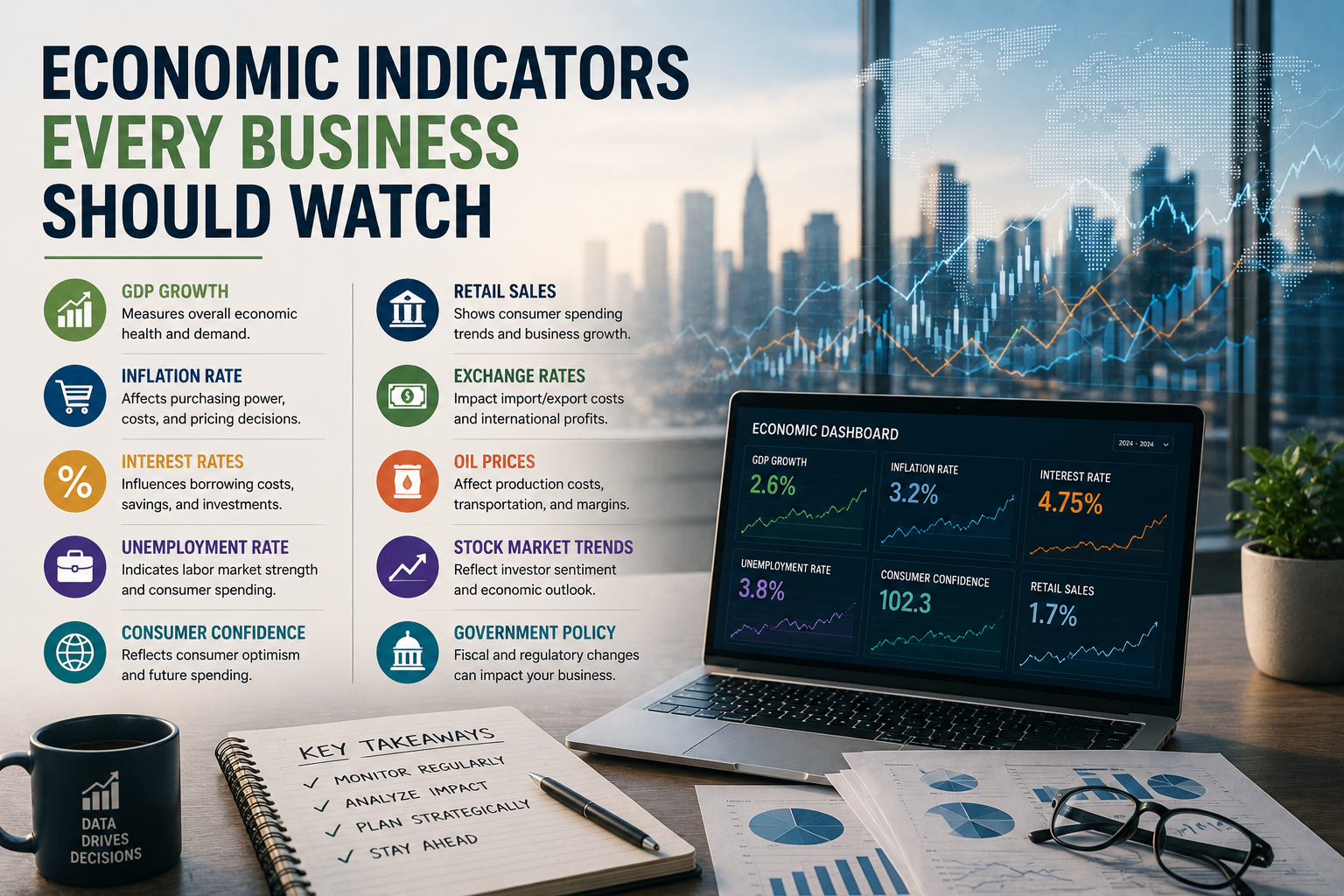
Learn which Economic Indicators every business should monitor to make informed decisions, manage risks, and identify growth opportunities.
Economic Indicators Every Business Should Watch
The economy has a direct impact on every business, regardless of its size or industry. Changes in inflation, interest rates, employment, and consumer spending can influence operating costs, customer demand, and investment decisions. Understanding key Economic Indicators allows business owners to make informed decisions, reduce financial risks, and prepare for changing market conditions.
Gross Domestic Product (GDP)
Gross Domestic Product (GDP) measures the total value of goods and services produced within a country over a specific period. It is one of the most widely used Economic Indicators for evaluating economic performance.
A growing GDP generally signals a healthy economy with increased business opportunities, while declining GDP may indicate slower economic activity and reduced consumer spending.
Inflation Rate
Inflation measures how quickly the prices of goods and services increase over time. Moderate inflation is normal, but high inflation can raise operating expenses, reduce consumer purchasing power, and affect business profitability.
Monitoring inflation helps businesses adjust pricing strategies, manage costs, and plan future investments more effectively.
Interest Rates
Central banks use interest rates to influence economic activity. Higher interest rates increase borrowing costs for businesses and consumers, while lower rates often encourage investment and spending.
Companies planning to finance expansion projects or purchase equipment should pay close attention to changes in interest rates.
Employment and Unemployment Rates
Employment data provides insight into the strength of the labor market. High employment levels usually reflect stronger consumer spending, while rising unemployment may reduce demand for products and services.
Businesses also use employment data to evaluate hiring conditions and workforce availability.
Consumer Confidence Index
Consumer confidence measures how optimistic people feel about their financial future and the economy. Confident consumers are generally more willing to spend money, supporting business growth across many industries.
Declining confidence may signal reduced spending and increased financial caution among households.
Retail Sales
Retail sales data reflects consumer spending patterns and overall market demand. Strong retail performance often indicates a healthy economy, while declining sales may suggest weakening consumer activity.
Retail sales trends help businesses forecast demand and adjust inventory planning.
Business Confidence
Business confidence surveys measure how optimistic companies are about future economic conditions. High confidence often leads to increased hiring, investment, and business expansion.
Lower confidence may cause organizations to delay major investments or reduce spending.
Exchange Rates
For companies involved in international trade, exchange rates significantly affect import costs, export competitiveness, and global profitability.
Monitoring currency fluctuations helps businesses manage international pricing and financial risk.
Stock Market Performance
Although stock market movements do not always reflect the entire economy, they often indicate investor expectations about future economic conditions.
Business owners and investors monitor market trends to assess financial sentiment and identify potential opportunities or risks.
Manufacturing and Industrial Production
Manufacturing output measures production activity across factories and industrial facilities. Rising production often indicates stronger economic demand, while declining output may signal slower economic growth.
Manufacturing data is particularly important for businesses involved in production, logistics, and supply chains.
Housing Market Activity
The housing sector influences construction, financial services, retail, and consumer spending. Home sales, construction activity, and property prices provide valuable insights into broader economic conditions.
Businesses supplying home-related products and services closely monitor housing market performance.
Why Businesses Should Monitor Economic Indicators
Regularly tracking Economic Indicators helps businesses:
- Anticipate market changes before they occur.
- Make informed pricing and investment decisions.
- Manage operational and financial risks.
- Plan hiring and expansion strategies.
- Improve budgeting and long-term forecasting.
- Respond quickly to changing customer demand.
Businesses that incorporate economic analysis into their planning are often better prepared for both opportunities and economic uncertainty.
Conclusion
Understanding Economic Indicators is essential for making informed business decisions in an ever-changing economy. GDP, inflation, interest rates, employment, consumer confidence, retail sales, exchange rates, and manufacturing activity all provide valuable insights into market conditions. By monitoring these indicators consistently, businesses can reduce risks, identify growth opportunities, and build stronger strategies for long-term success.
FAQs
1. What are Economic Indicators?
Economic Indicators are statistical measures that provide information about the overall health and direction of an economy.
2. Why are Economic Indicators important for businesses?
They help businesses understand market conditions, forecast demand, manage financial risks, and make better strategic decisions.
3. Which Economic Indicator is the most important?
GDP, inflation, and interest rates are among the most influential indicators because they affect business activity, consumer spending, and investment.
4. How often should businesses monitor Economic Indicators?
Businesses should review major economic data regularly, especially monthly and quarterly reports, to stay informed about market trends.
5. How do Economic Indicators affect business growth?
Changes in economic conditions influence customer demand, operating costs, financing options, and investment opportunities, all of which impact long-term business growth.
