
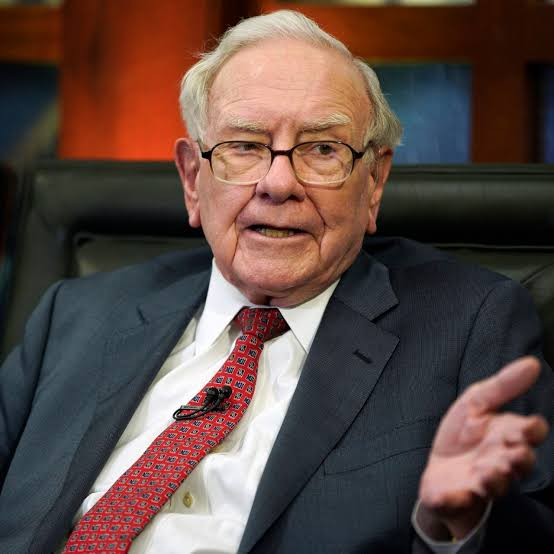
Warren Buffett has stepped down as chairman of Berkshire Hathaway, marking another historic leadership transition at the company he transformed from a struggling textile business into one of the world's most valuable conglomerates.
Berkshire announced on Friday that Buffett, 96, would become chairman emeritus, effective immediately. His son, longtime Berkshire director Howard Buffett, has been named chairman.
The change comes nine months after Warren Buffett handed the chief executive position to longtime Berkshire executive Greg Abel.
Together, the transitions effectively close the chapter in which Buffett personally occupied the most powerful executive and board positions at the company synonymous with his investing philosophy.
Warren Buffett Becomes Chairman Emeritus
Buffett is not disappearing completely from Berkshire.
His new title of chairman emeritus preserves his connection to the company while formally transferring the chairmanship to Howard Buffett.
The move was widely anticipated as part of Berkshire's long-planned succession strategy.
Buffett had already transferred the CEO position to Greg Abel, making Friday's announcement another major step in separating Berkshire's future leadership from its legendary investor.
In a letter to shareholders, Buffett reflected on his age and extraordinary tenure, writing that time eventually catches everyone.
Howard Buffett Takes the Chair
Howard Buffett has served as a Berkshire director since 1993, giving him decades of experience with the company's board and corporate culture.
His role as chairman is different from Greg Abel's operational responsibilities as chief executive.
Abel will continue running Berkshire's businesses, while Howard Buffett assumes the board leadership position.
The structure reflects Warren Buffett's previously stated succession philosophy: separate responsibilities while protecting the corporate culture that helped Berkshire operate across an unusually broad collection of businesses.
Abel said the culture and values established by Warren Buffett would remain central to Berkshire, describing Howard as their guardian.
A $1.1 Trillion Company Built Over Six Decades
Few corporate transformations compare with Berkshire Hathaway's.
When Buffett became involved with Berkshire in the 1960s, the company was primarily a struggling textile manufacturer.
The textile operation eventually disappeared.
The company name did not.
Buffett transformed Berkshire into an enormous holding company containing insurance, railroads, energy, manufacturing, retail and consumer businesses.
Reuters values the conglomerate at roughly $1.1 trillion, making Berkshire the only financial company inside a trillion-dollar club otherwise dominated by major technology businesses.
Buffett Changed How Generations Think About Investing
Buffett's significance extends far beyond Berkshire's share price.
His investment philosophy became one of the most influential approaches in modern finance.
Rather than constantly buying and selling stocks in response to short-term market movements, Buffett became associated with purchasing high-quality businesses at sensible prices and holding them for long periods.
His approach emphasised durable competitive advantages, capable management, predictable economics and disciplined capital allocation.
That philosophy turned Berkshire's annual shareholder meetings in Omaha into major events attracting investors from around the world.
Berkshire Became More Than an Investment Portfolio
One reason Berkshire is unusual is that it is not simply a fund containing publicly traded stocks.
The company owns operating businesses outright.
Its holdings span industries ranging from insurance and rail transport to utilities, manufacturing and retail.
Berkshire also maintains major investments in publicly listed companies.
This combination gives the conglomerate enormous flexibility in deciding where to deploy capital.
Cash generated by one subsidiary can ultimately help finance acquisitions or investments elsewhere in the Berkshire system.
Insurance Became Central to Buffett's Strategy
Insurance played a particularly important role in Berkshire's growth.
Insurance companies receive premiums before they necessarily have to pay future claims.
That creates what Buffett famously calls float — money held by an insurer that can be invested until claims eventually need to be paid.
When managed carefully, this provides a powerful source of investment capital.
Berkshire's insurance businesses therefore became much more than conventional subsidiaries.
They became one of the financial engines supporting Buffett's broader investment strategy.
The 'Buffett Premium' Is Now Being Tested
Investors have historically been willing to assign additional value to Berkshire because of confidence in Buffett himself.
That phenomenon has often been described as the Buffett premium.
But succession inevitably tests how much of Berkshire's valuation reflects its underlying businesses and how much reflects investors' confidence in the man who assembled them.
According to LSEG data cited by Reuters, Berkshire's price-to-book ratio has declined from roughly 1.62 to 1.53 since Buffett announced his departure from the CEO position.
That does not necessarily signal a rejection of the new leadership.
It does illustrate how closely Berkshire's market identity has historically been connected to Buffett.
Greg Abel Now Carries the Operational Responsibility
While Howard Buffett takes the chairmanship, Greg Abel remains the executive responsible for running Berkshire.
That distinction is important.
The chairman oversees the board, while the CEO handles the company's operational and strategic leadership.
Abel spent years working within Berkshire before being selected as Buffett's successor.
Investors will now increasingly judge Berkshire according to his decisions rather than asking what Buffett would do.
That includes capital allocation, acquisitions, subsidiary oversight and decisions about Berkshire's enormous cash resources.
Berkshire's Cash Gives the New Leadership Enormous Flexibility
One of the most closely watched questions will be how Berkshire deploys capital under its new leadership.
The company has historically maintained substantial liquidity rather than feeling compelled to invest simply because money was available.
Buffett's willingness to wait became a defining characteristic of his strategy.
That patience allowed Berkshire to act aggressively when financial markets produced unusually attractive opportunities.
Maintaining that discipline may be one of the most important tests for the post-Buffett company.
Investors Will Watch Acquisition Strategy Closely
Buffett built Berkshire through both stock investments and entire-company acquisitions.
But Berkshire's enormous size creates a mathematical challenge.
A small acquisition that could once have materially improved Berkshire's results now barely moves the needle.
Future management therefore needs very large opportunities to make a meaningful difference to the overall conglomerate.
That narrows the number of potential acquisitions capable of significantly affecting Berkshire's performance.
It also increases the importance of avoiding expensive mistakes.
Buffett's Reputation Became a Business Asset
Corporate reputation is difficult to value on a balance sheet, but Buffett's reputation clearly mattered to Berkshire.
Business owners considering selling their companies often viewed Berkshire differently from traditional private-equity buyers.
Buffett developed a reputation for allowing successful subsidiaries considerable autonomy rather than aggressively restructuring them after acquisition.
That made Berkshire an attractive buyer for some family-controlled businesses.
The new leadership will need to demonstrate that the same culture survives without Buffett personally making the deal.
A Rare Leadership Transition
Corporate succession is normally routine.
This one is not.
Buffett has been associated with Berkshire since 1965, giving the company an extraordinary degree of leadership continuity.
Many investors have never known a Berkshire Hathaway without Warren Buffett at the centre of it.
That makes the transition unusual even among the world's largest corporations.
The question is no longer who will succeed Buffett. Berkshire has already answered that.
The question is whether the institutional system Buffett created can produce similar discipline without depending on its founder's personal judgment.
What Happens Next?
Berkshire enters the next stage with a clearly divided leadership structure.
Greg Abel is CEO. Howard Buffett is chairman. Warren Buffett is chairman emeritus.
Investors will now watch how much changes — and perhaps more importantly, how much does not.
Berkshire's enormous collection of operating companies will continue doing business. Its insurance operations will continue generating capital. Its investment portfolio will remain substantial.
But Friday's announcement carries symbolic weight far beyond a boardroom title.
For roughly six decades, Warren Buffett and Berkshire Hathaway were almost impossible to separate.
Now Berkshire must demonstrate that one of the greatest achievements of Buffett's career was not merely building a trillion-dollar company — but building one capable of continuing after him.